Florida law provides for periods of criminal probation to allow defendants time to rehabilitate themselves. However, probation violations in Florida can result in very serious penalties and consequences, including jail time, fines, and other serious consequences.
In all Florida criminal cases, the State has the burden of proving your guilt beyond a reasonable doubt—or beyond a doubt based upon ordinary reason and common sense. However, in probation violation cases, the State’s burden of proof is not nearly as high as it is in other criminal cases. Consequently, when attempting to prove that you violated your criminal probation, the State has fewer procedural and constitutional hurdles to overcome.
If the state of Florida has charged you with violating your criminal probation, you should not go it alone. The St. Petersburg probation violation lawyers at Khonsari Law Group can review your case with you—as well as the terms of your probation—and may be able to help you minimize the consequences of a probation violation.
What Is a Criminal Probation in Florida?
Pursuant to the current Florida criminal statutes, the term ‘probation’ refers to a type of community supervision. During this supervisory period, offenders are required to maintain contact with certain individuals while their criminal case is pending in the Florida court system. In most cases, probation officers, parole officers, and community supervision officers supervise criminal offenders’ probations and ensure that they comply with—and successfully complete—all of the terms of their probation. The terms of an offender’s probation are typically set forth in a probation order issued by the Florida court where the case is pending.
Ways in Which Offenders Violate Their Probations
When it comes to determining whether or not an offender violated the terms of his or her probation, Florida courts and judges have wide discretion. Common probation violations include:
- Failing to report to a probation or parole officer
- Failing to complete mandatory community service activities
- Committing a new criminal offense or being arrested during the probationary period
- Failing to complete a court-ordered drug rehabilitation program
- Testing positive for drugs
- Failing to pay financial obligations imposed by the court’s probation order
Proving a Probation Violation and Imposing a Criminal Sentence
In order for the prosecution to prove that the offender violated his or her probation, the State’s Attorney must be able to show that the violation was both willful and substantial in nature. Assuming the prosecution meets its burden of proof, the court could revoke the defendant’s probation status. In that case, the guilty finding or conviction for the underlying criminal offense will stand. The court could then sentence the defendant up to, but not in excess of, the state statutory maximum penalty for the underlying criminal offense. Therefore, if the state maximum penalty for the underlying offense includes a period of incarceration, the judge could sentence the offender to the maximum period of incarceration available under the statute.
Call a St. Petersburg Probation Violation Lawyer Today
Depending upon the maximum penalty for the underlying criminal charge, a probation violation could land you in jail. Even if you are not sentenced to jail time, you can still face serious fines and other penalties. Therefore, you need a skilled criminal defense lawyer representing you throughout your case. To schedule a free consultation and case evaluation with a St. Petersburg, Florida probation violation lawyer, please call us at (727) 269-5300 or contact us online.
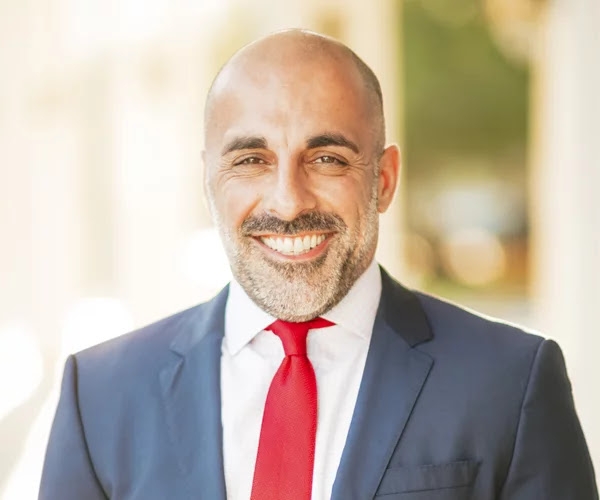
Rohom Khonsari
Lawyer
Mr. Khonsari founded and is principal/partner of the Khonsari Law Group. With experience in both criminal and civil law, Mr. Khonsari built the law firm with the standard of doing everything possible for each and every client. With over forty jury trials, he has used his trial advocacy in successfully representing clients charged in criminal court and also those who have cases in the civil realm.
Author's Bio